
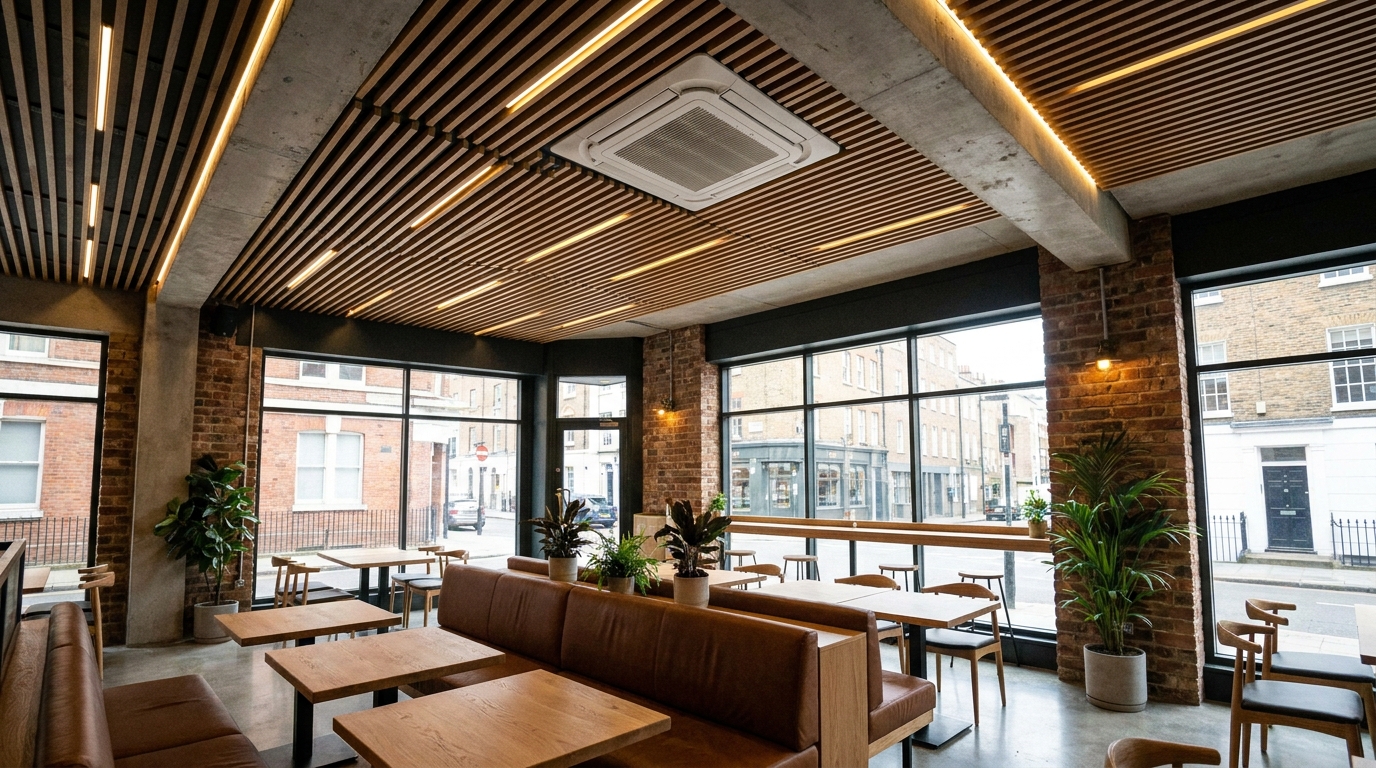
A broken AC during peak season costs more than installation ever would. Ask any restaurant owner who's watched covers walk out of a 30°C dining room in July, or a shop manager whose staff wilted through a heatwave. Comfort isn't a luxury in retail and hospitality — it's part of the product. Here's what commercial AC actually costs, how fast it pays back, and the compliance rules you can't ignore.
Why Commercial AC Is a Different Job
Commercial premises are a harsher environment than any home:
- Heat load is brutal. Every customer is roughly a 100W heater. Add kitchen equipment, refrigeration, lighting and glazing, and a busy café generates more heat per square metre than most industrial units.
- Run hours are long. Domestic systems might run 600 hours a year; a restaurant system can run 3,000+. Component quality and maintenance matter far more.
- Compliance is enforced. F-Gas regulations, TM44 inspections for larger systems, and landlord/insurer requirements all apply to business premises in ways domestic owners never encounter.
- Downtime is revenue. When a home unit fails, someone is uncomfortable. When yours fails, the till slows down.
The Main System Options
Ceiling cassettes — recessed into a suspended ceiling, throwing air in four directions. Discreet, even cooling with zero floor or wall space lost. The default choice for restaurants and shops with suspended ceilings.
Ducted systems — fully hidden, serving large or awkwardly shaped spaces through grilles. Highest aesthetic payoff, best for fit-outs and refurbishments when ceiling voids are accessible.
Multi-splits — several wall or ceiling units on one outdoor unit. Cost-effective for smaller retail units and offices without ceiling voids.
VRF — the premium multi-zone option for larger premises, hotels and multi-floor buildings, with individual zone control and market-leading efficiency at scale. (See our systems guide for the full comparison.)
What It Costs
| Premises | Typical system | Indicative installed cost |
|---|---|---|
| Small retail unit (up to 50m²) | Wall splits / small cassette | £3,000–£5,000 |
| Medium restaurant (100–150m²) | Cassettes / multi-split | £6,000–£12,000 |
| Large commercial (200m²+) | Ducted / VRF | £15,000–£40,000+ |
Indicative South East pricing including installation; kitchens, high glazing and difficult access push costs up. Itemised quotes only — if a contractor gives you one number on one line, keep shopping.
The Payback Maths
If you're replacing tired kit, modern inverter systems typically cut cooling energy use by 30–40%. On a system running 3,000 hours a year, that alone often pays back the upgrade within five to seven years — before counting the revenue side: customers staying longer, staff working comfortably, stock and equipment protected.
Case in point: a local restaurant we assessed was running two 15-year-old units flat out through service. After upgrading to modern cassettes, their summer electricity spend dropped by roughly £1,800 a year — and the dining room finally held temperature on a full Friday night.
The Compliance Bit You Can't Skip
Commercial systems sit squarely inside the UK F-Gas regime:
- Anyone installing, servicing or decommissioning refrigerant systems must hold F-Gas certification. Hiring uncertified labour exposes you — the business — to Environment Agency enforcement, with penalties starting around £300 per unit and scaling up sharply for deliberate breaches.
- Systems above certain refrigerant charges require documented leak checks at fixed intervals.
- Air conditioning systems over 12kW total output require a TM44 energy inspection every five years.
- Uncertified installation typically voids the manufacturer's warranty — turning a £15k asset into an unwarranted gamble.
Full detail in our F-Gas regulations guide. The short version: always verify certification before anyone touches your system. We're F-Gas certified and REFCOM registered, and we'll show you the paperwork before you ask.
Getting It Right First Time
The commercial installs that go wrong almost always fail at the survey stage: undersized systems specified from floor area alone, no allowance for kitchen heat or occupancy, outdoor units positioned where they recirculate their own hot air. Insist on a proper heat-load survey, itemised quotation, and a commissioning report at handover. It's your protection — and it's how we work on every job.
Planning cooling for your premises?
Get a free commercial AC audit — heat-load survey, system options and itemised pricing within 24 hours.
Get a Free Commercial Audit