
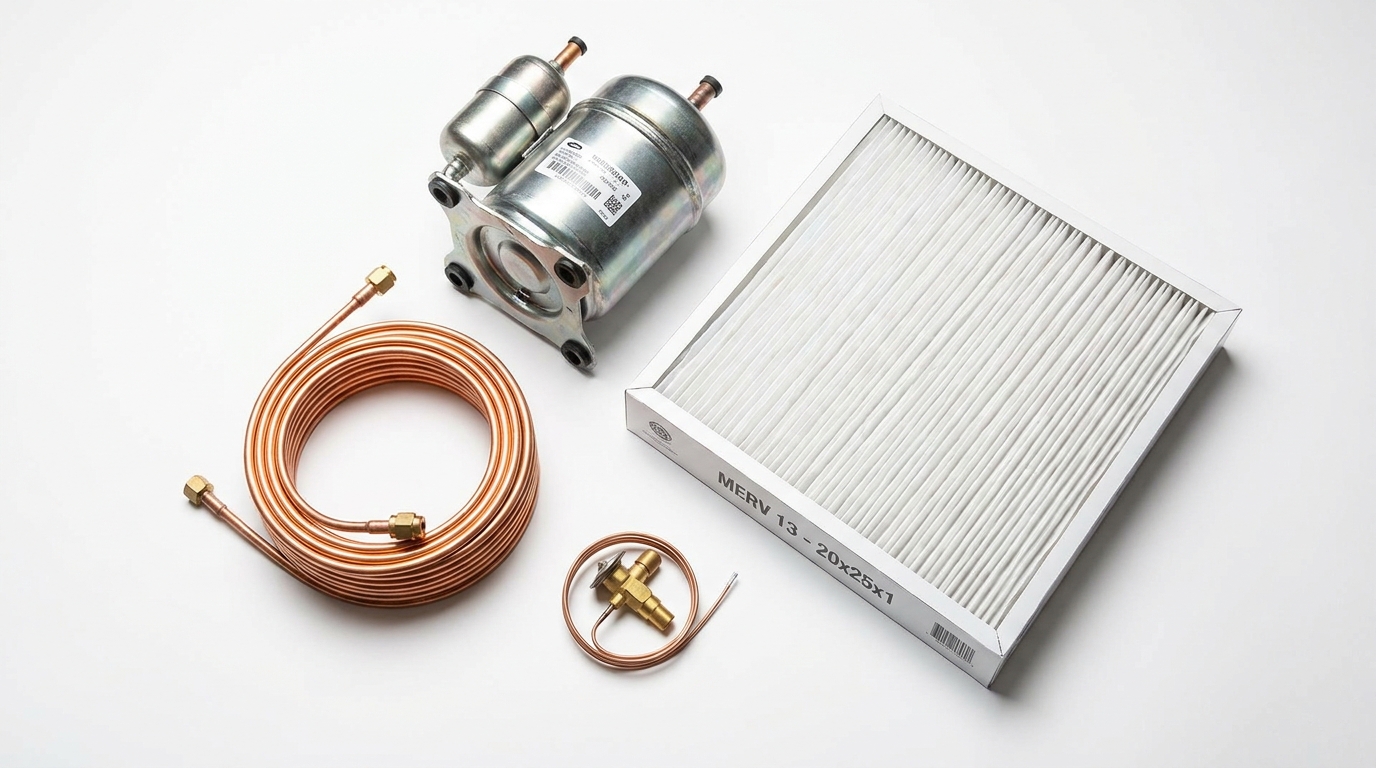
You don't need to understand your HVAC system. But your engineer should — and knowing the basics helps you spot when someone's bluffing, understand a quote, and recognise the early signs of trouble before they become expensive. Here's the tour, component by component.
1. The Compressor — the Heart
The compressor lives in the outdoor unit and does exactly what the name suggests: it compresses refrigerant gas, raising its pressure and temperature so it can release heat where you want it. It's the hardest-working and most expensive component in the system — replacing one can cost more than half the price of a new system.
Everything else in the system exists to protect and support the compressor. When filters clog, coils foul or refrigerant runs low, it's the compressor that pays the price, running hotter and longer until it fails. Most "sudden" compressor deaths are years of neglect catching up at once.
2. The Condenser Coil — Where Heat Leaves
In cooling mode, the condenser coil (in the outdoor unit) is where the hot, compressed refrigerant dumps the heat collected from your rooms into the outside air. A fan drives air across the coil to speed this up.
Because it lives outdoors, the condenser collects leaves, dust, cottonwood fluff and grime. A dirty condenser can't reject heat efficiently, so pressure rises, efficiency falls, and your electricity bill climbs — often 10–25% before anyone notices a comfort problem.
3. The Evaporator Coil — Where Cooling Happens
The evaporator coil sits in the indoor unit. Cold, low-pressure refrigerant flows through it while a fan draws warm room air across the fins. Heat moves from the air into the refrigerant; the air comes out cool and drier (the moisture condenses on the cold coil and drains away — that's your condensate line).
If airflow across the evaporator drops — usually because of a dirty filter — the coil can get so cold it ices over. Ironically, an iced coil insulates itself, cooling stops, and the melting ice can leak water down your wall. "My AC is leaking" is very often "my filter is filthy".
4. The Expansion Valve — the Regulator
Between the condenser and evaporator sits a small, unglamorous device that does precision work: the expansion valve. It meters exactly how much liquid refrigerant enters the evaporator and drops its pressure sharply, which makes it cold. Too much flow and liquid refrigerant can reach the compressor (bad); too little and the system starves and overheats.
Modern systems use electronic expansion valves that adjust hundreds of times per hour — one reason inverter systems hold temperature so smoothly compared with old on/off units.
5. Refrigerant — the Lifeblood
Refrigerant is the fluid that carries heat around the circuit, engineered to boil and condense at exactly the temperatures the cycle needs. Two things every owner should know:
- It doesn't get "used up". A sealed system should never need topping up. If your engineer says you're low on gas, you have a leak — and the leak should be found and fixed, not just refilled. (Under UK F-Gas rules, knowingly recharging a leaking system without repair isn't just poor practice — it's a compliance issue. More in our F-Gas guide.)
- The type matters. Older systems run R-410A or even R-22; modern units use R-32, which has a far lower global warming potential and better efficiency. R-22 is banned for new supply, making old systems progressively more expensive to maintain.
6. Filters & Airflow — the Unsung Heroes
Filters protect the evaporator coil and your lungs. When they clog, airflow drops, and the knock-on effects cascade through everything above: iced coils, longer run times, higher bills and a compressor working roughly three times harder than it should. A £0 filter clean prevents a £2,000 compressor replacement — that's the entire economics of maintenance in one sentence.
How It All Fits Together
Follow the loop: the compressor squeezes refrigerant gas hot → the condenser releases that heat outdoors → the expansion valve drops the pressure, making the refrigerant cold → the evaporator absorbs heat from your room → the gas returns to the compressor and the cycle repeats, with filters keeping the air path clean throughout. Every fault you'll ever experience is one of these five stages misbehaving.
Why Maintenance Matters
Each component degrades quietly. Efficiency losses arrive years before breakdowns do, which means you pay for neglect monthly on your energy bill long before the repair invoice lands. An annual service — coils cleaned, refrigerant pressures checked, electrics inspected, drains flushed — keeps the whole loop working as designed. Our seasonal maintenance checklist covers exactly what should be done and when.
Keep your system healthy
Book an annual service — coils, gas pressures, electrics and drains, all checked and documented.
Book a Service