
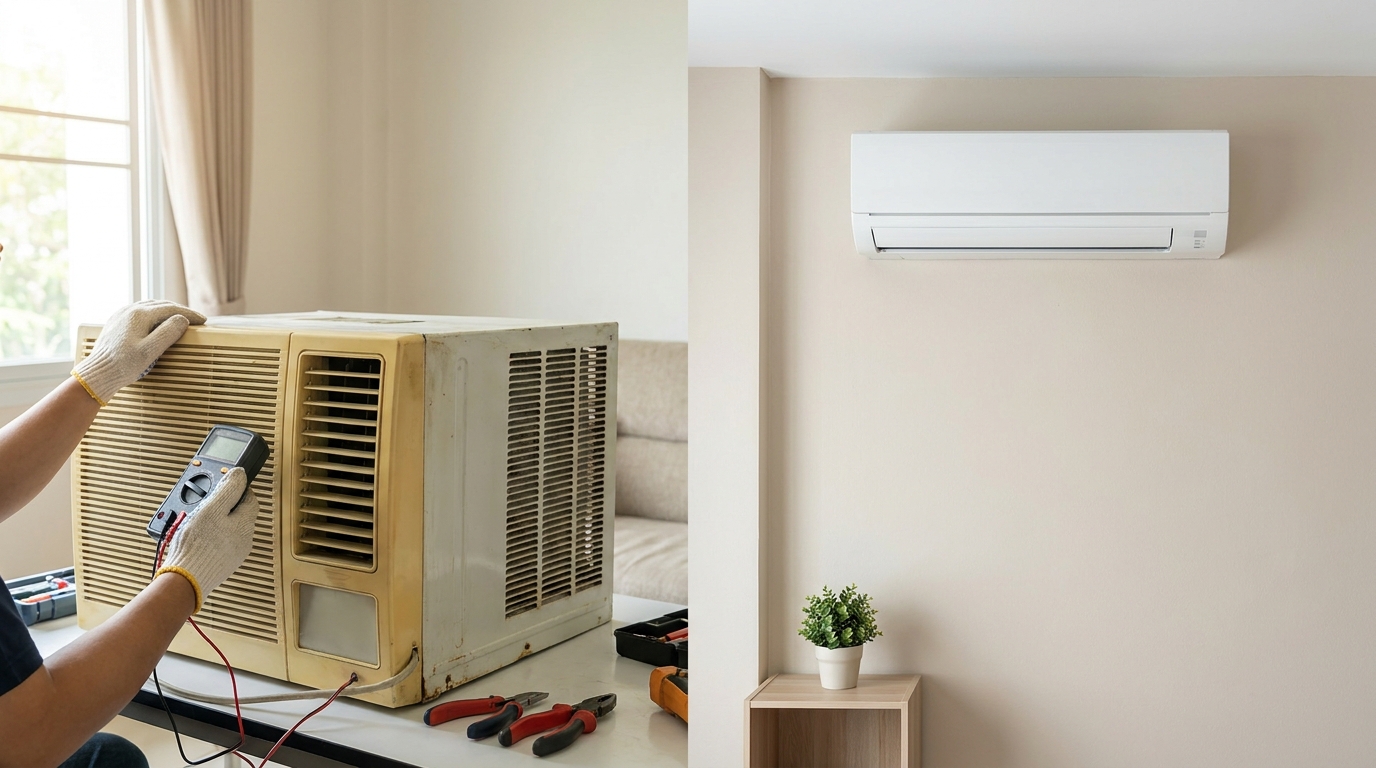
"Should I fix it or replace it?" is the question we hear most, and the honest answer is: it depends on numbers you can actually work out. Here's the framework we use ourselves — the same one we'd apply if it were our own system and our own money.
Signs a Repair Makes Sense
- The system is under 10 years old. Modern units are designed for 15+ years of service. A single fault mid-life is normal, not a death sentence.
- The repair costs less than 50% of replacement. The classic rule of thumb. A £300 capacitor or fan motor on a £3,000 system? Repair, every time.
- The unit is under warranty. Obvious, but check — many manufacturers offer 5–7 year warranties that owners forget about. (This is also why using certified installers matters: uncertified work voids most warranties.)
- The issue is isolated. One failed component in an otherwise healthy system is a repair. It's the pattern of failures that should worry you.
Signs It's Time to Replace
- The system is over 15 years old. Beyond this point you're paying old-tech running costs while waiting for the next fault.
- A repair exceeding £1,500 on an aging unit. Spending big money on borrowed time rarely pays off.
- It runs R-22 refrigerant. R-22 has been banned from supply in the UK/EU since 2015. Any repair needing a regas on an R-22 system is effectively impossible to do legally with virgin refrigerant — and reclaimed stock is scarce and costly. This alone often decides the question.
- Multiple components are failing. When the fan motor goes six months after the PCB, which went a year after the valve, the system is telling you something.
- Energy bills are spiking. Aging systems lose efficiency gradually. If cooling costs have crept up 20–30% over a few years with the same usage, the system is quietly billing you for its own replacement.
The Hidden Cost of Old Systems
Old refrigerants are the trap most owners don't see. Where R-22 can still be sourced (reclaimed), it typically costs three to five times more than modern R-32 — and that's before the callout and labour. Meanwhile, a modern R-32 inverter system can use 30–50% less electricity than a 15-year-old unit doing the same job. You're not comparing "repair cost vs replacement cost"; you're comparing "repair cost + high running costs + next failure" against "replacement cost − energy savings".
Repair vs. Replace: A Worked Example
| Repair the 16-year-old unit | Replace with modern R-32 system | |
|---|---|---|
| Upfront cost | £1,200 (compressor + regas) | £2,800 installed |
| Annual running cost | ~£520 | ~£310 |
| Likely further repairs (5 yrs) | £600–£1,200 | £0 (under warranty) |
| 5-year total | £4,400–£5,000 | £4,350 |
| Position after 5 years | 21-year-old system, no warranty | 5-year-old system, warranted, efficient |
Illustrative figures for a typical domestic split system in the South East. Your numbers will differ — which is exactly why a proper assessment beats a rule of thumb.
Notice the totals converge — but one path ends with an asset and the other with a liability. That's the pattern we see over and over: replacement rarely looks cheaper on day one and very often is cheaper by year five.
The Framework in 30 Seconds
- Under 10 years old + isolated fault + repair < 50% of replacement → repair.
- Over 15 years old, or R-22, or repeat failures, or repair > £1,500 → replace.
- In between → get the running-cost comparison done properly before deciding. Ten minutes of arithmetic can save four figures.
Not sure which side of the line you're on?
Get a free diagnostic assessment — we'll give you the repair price and the replacement comparison, and let the numbers decide.
Get a Free Assessment